Author Archives: Jonathan Dearth

  1. Michelle Soan

    Leave a Comment
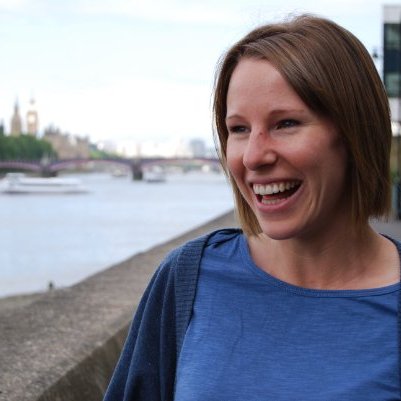
    Michelle Soan

    Whilst Head of Mobilisation at MacMillan Cancer Support

    Apart from your current organisation which other organisations that campaign do you admire?
    Alzheimer’s charities – they have executed impressive campaigns for access to treatments targeted at NICE, at the same time as raising the profile of a devastating condition.

    Who is the campaigner you most admire?
    It’s hard to pick one person, but Marjorie Wallace, SANE’s chief executive has done a huge amount for mental health, which is sadly still seen as a taboo, despite how common it is. Going back in history I have huge admiration and respect for the Suffragettes, namely Emily Davidson who threw herself under the Kings horse in the name of votes for women.

    Is there a campaigning organisation that you would like to see the back of?
    Not that I’d admit to in public. However, even organisations for issues I disagree with add something to the debate, so I wouldn’t like to see the back of any of them as I believe in freedom of speech.

    What advice would you give someone starting their career in campaigning today?
    Try new things and don’t be afraid to take risks. Also, look at what other organisations are doing and learn what works and what doesn’t. I have always found it very useful to join the campaign networks of other organisations as a great way to benchmark our activity.

    What three things make a good campaigner?
    Good communication skills, desire to try new ideas, and flexibility – willing to change strategy and tactics to react to the changing environment

    Which of these three do you have most of?
    I would say communication skills. In order to run successful campaigns it’s essential to engage and motivate a team that you don’t line manage. I believe the key to that is building good relationships and communicating effectively with the team and all stakeholders (internally and externally).

    Which of these three do you think is missing most out of people who campaign or want to?
    I think generally there can be a reluctance to trying new ideas and taking risks, but this may not be about the individual and more about organisations not being open to new ideas in case they don’t succeed. New ways to campaign are constantly evolving, particularly with the rapid growth of online social media opportunities. I think you need to be bold and take risks to keep campaigns fresh. I’ve been fortunate that I have been able to, but it requires you to be very persuasive.

    Generally are organisations getting better at campaigning since you began your career?If so, what’s changed?
    I’d like to think so. There are still some out there who think it’s just down to PR stunts, but there is so much expertise out there and new technology that it’s exciting to see what organisations are doing.

    If you weren’t a campaigner, what would you be?
    Working in the media – I love the buzz and unpredictable nature of it.

  2. Senegal 15

    Leave a Comment

    I recently helped to run an advocacy workshop on migration in Dakar, Senegal. It was a great event with representatives from African, European and Middle Eastern countries.

    Unlike many events that I’ve been involved in running advocacy training this event seemed really special because the vast majority had little or no prior experience of advocacy. So therefore the initial focus was a lot about de-mystifying the concept of advocacy.

    This involved trying simply to define advocacy in terms of problem, solution, target and then seeking to influence that target. We then introduced some basic advocacy tools such as the influence tree and the theory of change, and then we supported delegates to begin to develop their own country specific advocacy strategy.

    I was really struck by a woman from one North African country, who said to me that all of these ideas had been in her head and that she had wanted to do things in the past, but a framework approach to advocacy had helped structure her thinking to move things forward.

    As these advocacy strategies began to develop, a colleague came up to me concerned about the development of one particular country specific advocacy strategy. This country’s representatives were focusing on the need to develop a migrant reception centre, and my colleague was concerned that this was not an appropriate response to the advocacy question.

    I was interested nonetheless that this was their initial humanitarian concern and their preferred response to this particular crisis. I suggested that this was an appropriate response, but having developed a reception centre and having begun to provide support in the reception centre that such an operational service could then provide the essential ingredients and evidence for advocacy on this issue.

    So that a theory of change could initially include their aspirations to get support for a reception centre and then to begin to run a reception centre, but I would then like to think that the theory of change would include the opportunities for advocacy based on the operational experience of running that reception centre.

    I am continually interested at the overlap and interplay between delivering direct operational services and the need for advocacy. I often talk about them being two sides of the same coin. This is hardly a unique insight, but it is really important to see them as being and having a very close relationship. At the Red Cross we talk about our preferred instinct to respond to an operational crisis is to get directly involved and to deliver direct humanitarian support; however when those services alone are not enough to deal with the problem that is when we will advocate and push for policy and practice change.

    I was really interested to see at such an advocacy workshop on migration how many people’s understandable first preference was to deliver direct services to help people in crisis; however the challenge has to be that very often direct services are not enough to deal with the problem, certainly when they are as big as the current global migration issue, and that is why advocacy campaigning is so, so important.

  3. Claire Bass

    Leave a Comment

    Claire Bass

    Whilst Head of Wildlife Campaigns at the World Society for the Protection of Animals


    Apart from your current organisation which other organisations that campaign do you admire and why?

    I admire the Environmental Investigation Agency a great deal, they punch way above their weight as a small organisation. They strike a good balance between work on long-term strategies and objectives while retaining the flexibility to act quickly in response to reactive opportunities.

    Generally are organisations getting better at campaigning since you began your career? If so, what’s changed?

    In the animal protection NGO movement I think yes, we are getting a lot more professional. Ten or more years ago the animal protection movement’s activities were often driven by righteous indignation, and an expectation that simply exposing problems in a report or a video on a website would stop cruelty. I think there’s a greater focus by many groups now on strategy, identifying and communicating effectively with key audiences, and on measuring impacts for animals, rather than volume of protest.

    Which campaigner inspires you most?

    Margaret Aspinall of the Hillsborough Family Support Group made a huge impression on me when I saw her speak at the Sheila McKechnie Foundation’s People Power event earlier this year. Her tenacity and unerring conviction that they would achieve justice, even in the face of such formidable and unyielding opposition and countless roadblocks, was truly inspiring.

    What three attributes make a good campaigner?

    Focus, empathy, tenacity.

    What’s the most rewarding or exciting campaign you’ve worked on and why?

    A few years ago we co-ordinated a very complex global public action to get people to ask their governments to vote against a proposal to partially lift the international ban on commercial whaling. Enabling multi-lingual protest, and working with more than forty other NGOs to ensure maximum public and media outreach in their respective countries, was challenging but ultimately extremely rewarding. Countries who had been considering the proposal ultimately rejected it in response to the public opposition; one Commissioner publicly cited our action as a clear indication from home that his ‘room to negotiate was not large’.

    How do you feel campaigns will change over the next five years?

    I would hope to see more campaigns creating market incentives for positive action – campaigns which equip consumers and investors to make ethical choices with their money. If campaigners can continue to extract greater transparency in supply chains, exposing the impacts of certain products and practices on people, animals and the environment, I think there exists an opportunity to make that information easily available to consumers.
    If the way that people’s buying or investing choices are affected – either negatively or positively – is then clearly and quantitatively fed back to companies, this could help create more market imperatives for positive policy changes. It would be great to see more alliances developing between different NGO sectors to pool this sort of information, so that a consumer could have easy access to a company or product’s overall ‘ethical footprint’.

    What advice would you give someone starting their career in campaigning today?

    There’s a lot of good literature on theories of campaigning, behaviour change etc now, many advocating very different approaches based on whether your end goal is to change hearts, minds, or actions, or a combination of the three. I’d say read up and talk to your new colleagues about which philosophies and tactics they favour and why.

    If you weren’t a campaigner, what would you be?

    Maybe an investigative journalist.

  4. Should all charities merge their communication and fundraising teams?

    Leave a Comment

    There has long been an issue, and even on occasions minor conflict, between Communications/Campaigning departments and Fundraising departments. Over the 22 years that I’ve worked inside organisations like Shelter, Save the Children and Amnesty, I’ve seen this happen.

    However, the teams or departments shouldn’t be merged. The motivations and the skillsets of the leaders of the two teams are often different. The skills crossover, but fundamentally a fundraiser needs to push the boundaries in order to maximise income and will feel the pressure to do so. A communications/campaigns leader may be able to focus more on long term objectives about change.
    Also, what we see at our recruitment consultancy, The Right Ethos, is that when it comes down to employing staff, people like to specialise still. As a CEO, people are happy to oversee specialist people leading Fundraising or Communications. But, if they are a Communications practioner for example, then they would prefer not to be responsible for the fundraising side.

    Hence The Right Ethos specialises on recruiting for roles in Communications & Campaigning.
    What is important is that the two Directors or Heads of the respective departments work well together and share objectives – and are supported and lead properly by their line manager/CEO.
    This blog was in response to an article in the Guardian ‘Should all charities merge their communication and fundraising teams?’ Wednesday 24 June 2015. Click Here for full article

  5. Great question

    Leave a Comment

    I was asked a great question the other day: who needs to know about the impact of your advocacy campaigns?

    It stopped me in my tracks, and did give me food for thought. When I started my campaigning work at Oxfam, I remember being keen for public recognition of the role that Oxfam was playing in any campaign. I was involved in the campaign to abolish supermarket vouchers for asylum seekers almost 15 years ago now, and while it was a successful campaign involving many organisations, I still wanted some public recognition along side others of the role that Oxfam was playing.

    I wasn’t that obsessed by the need for profile, but I did want some degree of external recognition for Oxfam. Although I remember some of my colleagues wanting more profile for the organisation. I will never forget the degree of concern there was when I arranged a press conference on the issue, which included the British Medical Association and the Transport and General Workers’ Union – but without Oxfam. I do think that there will be stages of a campaign where you will make judgments that your organisation is not needed. But not withstanding that point, I still wanted recognition for Oxfam.

    Now at the Red Cross, I am interested to observe how, with the benefit of age perhaps, I have changed my thinking. We are seeking to influence government policy on the section 4 azure payment card for asylum seekers – a sad carry-over from the former vouchers scheme.

    I now find myself less concerned about public recognition of the role played by my organisation. My increasing focus is on the humanitarian suffering caused by this payment card and pushing for a return to cash payments for this group of people.

    Yet I do realise that there are important audiences from whom I do still want some recognition for the role of the Red Cross. Chief amongst that audience are our staff and volunteers – and indeed our wider supporter base. I would also be keen for the key Parliamentarians to know about our work to help us build credibility for future engagement.

    The information that I would like to convey is less about our impact but more about our progress with our theory of change. By this piece of jargon I basically mean telling the story of the campaign. The more I do this work the more I see successful campaigning is about being able to tell the story of your campaign. Such a story will include both the past and the future.

    So I hope to convey to my key audience the journey that we have covered to date and then the future direction we plan for our campaign. And with any such story there will be breakthroughs and set-backs – the campaign story needs to include both but always with a focus on the new future direction.

    For me now in my campaigning, recognition is less important, but the significance of telling the campaign story is even more needed that ever. Do you involve story telling in your campaigning?

  6. Sarah Williams

    Leave a Comment

    sarah_williams

    Campaigns Manager, Living Streets

    Apart from your current organisation which other organisations that campaign do you admire?

    There are many but Shelter often stand out for me. Their approach is extremely focused and strategic. They’ve done a fantastic job at getting housing the political prominence it needs.

    Who is the campaigner you most admire?

    Mark Thomas. He has a great mix of humour, tenacity, fantastic ideas and a novel way of sharing news of his campaigns beyond a traditional audience.

    Generally are organisations getting better at campaigning since you began your career? If so, what’s changed?

    I don’t know if they’re better, but I think they’re adapting well to a changing landscape. If I think about the history of campaigning organisations I’ve been involved with, they have always successfully fought for things that matter.
    What is exciting is the speed at which some campaigns can take off, and the ease that digital platforms can offer for engagement. I think organisations are getting better at using these. Rethink’s Find Mike campaign was a great example of a compelling story, a simple message and an easy action.

    What three attributes make a good campaigner?

    Probably similar to those that Mark Thomas has; Tenacity, a sense of humour and an ability to target and focus well.

    What’s the most rewarding or exciting campaign you’ve worked on and why?

    There are so many! Just before I left Parkinson’s UK I worked with local campaigners to successfully campaign for a Parkinson’s nurse. They had been trying for over two years and there was no specialist care in place when they asked me to help.
    I came in to help them think a bit differently, but made sure that the local campaigners were still at the forefront. Within three months they had an agreement to get a new Parkinson’s nurse in place. I love knowing that the people I worked with will see things improve for them and the ones they love.

    How do you feel campaigns will change over the next five years?

    I think we’ll see a lot more high profile individual campaigns because of social media and platforms like Change.org. The personal stories will be the ones that get attention and are widely shared.

    What advice would you give someone starting their career in campaigning today?

    Get involved and make mistakes. Don’t worry about trying things out, sometimes the things you’re sure are going to work well don’t – and vice versa. Find other people and organisations that you admire and talk to them to find out what they do and how they do it.
    I think that’s the same advice for people at any stage of their campaigning career.

    If you weren’t a campaigner, what would you be?

    Probably working in Corporate Social Responsibility for businesses helping them to change from the inside.

  7. Barbara Crowther

    Leave a Comment

    Director of Policy and Public Affairs at Fairtrade Foundation

    Apart from your current organisation which other organisations that campaign do you admire and why?

    So many! Greenpeace continues to be both brave and innovative – not least the Russian illegal detention of the Arctic Sunrise 30, but also their ability to drive serious issues with a sense of fun – I loved their Star Wars campaign to turn Volkswagen from the ‘dark side’ and the Chainsaw Barbie campaign to Mattel. I’m impressed how38 Degrees has woken everyone up to the power of online in driving nimbleness and democratisation of mass-scale campaigning that every organisation can learn from, and springboarding from online to focussed local organisation and direct action. Traidcraft did an awesome job as part of the successful campaign to win the establishment of a Grocery Code Adjudicator – a supermarket watchdog with teeth – and continues to plug away solidly on trade justice issues where many other NGOs have flagged!

    Generally are organisations getting better at campaigning since you began your career? If so, what’s changed?

    I think campaigns have got smarter in terms of pushing for specific policy or public goals, and in being creative in how they seek to reach the public and their targets. I do think we’ve lost ground a little on local and grassroots organisation – traditional NGO campaigning has become much more individual action oriented, but at Fairtrade, we have great experience of the power of local mobilisation. Fairtrade towns campaigns have been the backbone of building public awareness and applying change and pressure on companies and public authorities, and we’re proud of that!

    Which campaigner inspires you most?

    It’s probably clichéd right now to say it, but Malala is pretty awesome – such bravery and such maturity at such a young age. She never asked to be in a global spotlight, and I have occasionally worried about Western media or political manipulation. But you only have to listen to one interview with her to know that she has all the great qualities of a legendary social justice campaigner. Loved her response to the Nobel Peace Prize outcome – that winning peace is more important than winning prizes!

    What three attributes make a good campaigner?

    Firstly vision – a clear sense of the change you seek – vision requires you also to understand the world and power dynamics you’re dealing with. Second, dogged perseverance – very few campaigns are won overnight and most get knockbacks, so refusing to give up, and looking for new ways around obstacles is critical. Thirdly, creative flexibility – being able to react and adjust plans if they’re not working, or find a new creative way of bringing the campaign alive again if it’s flagging, or seizing quickly on a new opportunity you hadn’t seen at the outset.

    What’s the most rewarding or exciting campaign you’ve worked on and why?

    The massive mobilisation for Jubilee 2000/Drop the Debt Campaign from 1997-2002 was a pretty exciting time for international development and economic justice campaigning. With hindsight, we didn’t always get it right, and of course it’s still not been won, but it was an amazing global effort, especially in the global South, and delivered some good progress in writing down some of the excessive debt burdens and challenging the nature of conditions being imposed. Our campaign for Fairtrade bananas since 2000 has been pretty successful – around 1 in 3 bananas sold today are Fairtrade – and we’ve had great fun with it, but more to the point, I’ve had the privilege of seeing its positive impact for banana farmers and workers. Again we’ve not yet reached our goal and need to turn the tables now – campaign for there to be no unfair bananas left in the UK, until the industry as a whole is delivering living wages and sustainable livelihoods for banana workers and farmers. If we can do that on bananas, it could be an iconic victory that could spill over to other global supply chains and business practices.

    How do you feel campaigns will change over the next five years?

    There’s going to be a push for even greater transparency of information and decision making, at local, national and international level – whether it’s campaigning health or child welfare, or private sector responsibility and corporate accountability or local and national government policy. People will take more matters into their own hands as we go further into an open access era of campaigning – technology is putting more power to campaign in the hands of many more people, by making information more accessible, creating new networks that transcend local or national boundaries, but also potentially to find their own solutions through peer-to-peer or shared economy, as we’re seeing in lending, community energy generation, car sharing etc. In Fairtrade we’re calling it ‘Unlocking the Power of the Many’!

    What advice would you give someone starting their career in campaigning today?

    Get stuck in with both your heart and your head – focus on something you really believe in and care about, but also make sure you do the hard graft study of the politics and the gritty details, so you know your stuff and can apply political intelligence alongside your passion for change. If you’re just setting out and seeking a first step on the ladder, consider volunteering or an internship with a campaigning organisation or team – I know many people who gave their time in the first instance, built up their skills, knowledge and experience, started at the bottom but went on to paid campaigning roles in organisations they have really wanted to work for.

    If you weren’t a campaigner, what would you be?

    Dead?

  8. Patrick Olszowski

    Leave a Comment

    Patrick Olszowski

    Whilst Head of Campaigns and Policy, Stroke Association


    Apart from your current organisation which other organisations that campaign do you admire?

    Global Witness have brought significant change to the international trade in diamonds and are currently involved in an important case around NGO investigations and data protection.
    While they appear fearless in the face of challenge, I am sure there must be moments of abject fear when they are engaging with powerful interests. This is common for all of us who campaign and the key is to use anxiety as a way of learning.

    Who is the campaigner you most admire?

    The campaigners I most admire are the Greenpeace team who scaled the Shard in London. This bold action helped draw attention to drilling in the Arctic and was a brilliant example of individual bravery sparking storytelling, leading to public mobilisation, brand building and donation.

    Is there a campaigning organisation that you would like to see the back of?

    Speaking personally, I am not a fan of the record industry lobby. They helped bring in the Digital Economy Act and as someone who firmly believes in the right to a fair trial (this law was proposing to disconnect people from the internet), they would have to be my choice.

    What advice would you give someone starting their career in campaigning today?

    Before you take action, think about how you want the world to be different and then work backwards from there.
    Most campaigning is about relationships, understanding who people are, what motivates them, the constraints they operate under and then (and only then) working out how to shift them from one place to another.

    What three things make a good campaigner?

    1) Being able to craft compelling stories.
    2) Being able to separate people from the power. This is about a cold headed and rational power analysis. Where is the decision made, who makes it, who influences these people, who do I know, who am I going to speak to first?
    3) Recognising that changing the world is just as much about fundraising, service delivery and service improvement as it is about public affairs and mobilisation.

    Which of these three do you have most of?

    My mission in life is to tell compelling stories that create real change. At the Stroke Association my colleagues in the Media and Campaigns teams have been working hard to tell a different story about stroke, to bust the myths:
    1) That stroke only happens to older people. Nope, it can happen at any age.
    2) That stroke leads to the end of life. Again wrong. With the right support, people can and do go on to recover and make very significant contributions.
    3) That stroke is inevitable. Again, if you do just one thing post reading this article, get your blood pressure checked. It might just save your life!
    I developed and launched the Life after Stroke campaign, (an integrated public affairs and media campaign) which has led to real world policy wins, changes in the law, a continued priority for stroke, huge media coverage, new supporters and funds.
    The really exciting thing is that now this story is starting to gain real momentum, other opportunities are appearing. Stroke has just been featured on Eastenders (one of the characters has had a stroke), we’ve been picked to be the Royal Mail’s charity for the next two years and are finding new supporters all the time.

    Which of these three do you think is missing most out of people who campaign or want to?

    As campaigners our instinct is for action. We all need to remember to stop, think and analyse where power lies before leaping to action, hopefully, though, without losing our zeal!

    Generally are organisations getting better at campaigning since you began your career? If so, what’s changed?

    I think that charity campaigning is going to change significantly. Some charities will be put off by the Lobbying Act, others will see diminishing returns from tired “contact your MP” actions and others will not do enough to tie their work in closely with the wider work of their charity and so lose impact.
    I believe the most successful campaigning organisations are already highlighting problems and coming up with answers that are both desirable and financially sustainable. This is often not easy but is essential as campaigning is about DELIVERING improvements in people’s lives.

    If you weren’t a campaigner, what would you be?

    Even if I wasn’t lucky enough to be paid to campaign, I’d still be a campaigner.

  9. Penelope Gibbs

    Leave a Comment

    Penelope Gibbs

    Director of Transform Justice


    Apart from your current organisation which other organisations that campaign do you admire and why?

    Policy Exchange – because whatever one thinks of their views, they have succeeded in getting the ear of this government and have influenced policy profoundly. They have championed police and crime commissioners and the breaking of the public sector “monopoly” over probation services. Without them these things might not have happened. I admire them because they are effective, though they probably wouldn’t describe themselves as campaigners.
    Citizens UK for campaigning for the Living Wage. They have argued well, got good evidence and successfully used community organisers as advocates. A worthy cause slowly and steadily won, mainly through face to face contacts and meetings.

    Generally are organisations getting better at campaigning since you began your career? If so, what’s changed?

    Organisations are getting better but the political space is getting more difficult to influence. MPs and Peers are efficiently whipped and few will defy their party.
    E-campaigning has revolutionised campaigning through helping charities to harness the passion of thousands of supporters. It’s a double edged sword though, because the more mass e-mail campaigns there are, the more difficult it is to break through.

    Which campaigner inspires you most?

    Ray and Vi Donovan’s son Chris was killed by a group of boys in horrible circumstances. Ray and Vi met their son’s killers in a restorative justice conference and felt “free” for the first time in years. They have set up a trust in memory of Chris and tour the country talking about their experience and the power of restorative justice. Ray and Vi truly have created good out of bad.

    What three attributes make a good campaigner?

    Passion
    Guile
    The ability to understand other points of view

    What’s the most rewarding or exciting campaign you’ve worked on and why?

    The Out of Trouble campaign I led for the Prison Reform Trust was very rewarding. The aim was to reduce the number of children and young people imprisoned in the UK. During the course of the five year campaign, the number of under 18 year olds imprisoned in England and Wales reduced by a third. A sign of true success is that the campaign ended in September 2012 but the numbers have continued to fall ever since.

    How do you feel campaigns will change over the next five years?

    I hope campaigns will focus less on changing the law. Legislation is very powerful but changing legislation does not necessarily produce social change and vice versa.

    What advice would you give someone starting their career in campaigning today?

    Be incredibly focussed. Campaigns with vague, amorphous aims tend not to work. Remember achieving your aim is the most important thing. It doesn’t matter if no-one knows who or what organisation was behind a positive social change, as long as it happens.

    If you weren’t a campaigner, what would you be?

    A civil servant. Civil servants have more power to influence positive social change than anyone else in government. But I would need to be able to conform and I’m not convinced I could.

  10. Monitoring and Evaluating Advocacy

    Leave a Comment

    Whenever I have run a training session on advocacy campaigning, I have felt a loss of energy and momentum when I have turned to the subject of monitoring and evaluation.

    As an activist, very often training a room full of fellow activists, I am most interested in sharing the tools that will encourage people to tackle injustice and develop campaigns. But I also know that campaigning is not just about doing stuff, but it is about making a difference.

    So I was really interested at the British Red Cross, when we started to discuss as a new advocacy team how we would want to approach the monitoring and evaluating of our own advocacy. I have written before about the power of using a theory of change approach – a simple chain of events connected by the words ‘so that’ – and then regularly reviewing progress against this theory of change.

    But I was challenged by one of my research colleagues to take a look at the UNICEF monitoring and evaluating advocacy guide – see here.

    I began reading it with a feeling of ‘I’ve seen all of this before’, but the more that I read, the more interested I became – in particular I was interested in their development of a log frame for advocacy. Part of me rebels against a chart with a series of boxes – advocacy cannot be tied down to just one page, surely?

    But the more I looked at their log frame and began to apply it to one of our own advocacy issues, I was surprised at how easy it was to complete and that it was actually a very useful exercise. I liked the structure of goals, interim targets and activities, and I liked how the log frame made you think about how you wanted to move your issue on. I found that the answers to all of these questions were in my head anyway, so it wasn’t too hard to put it all into the log frame.

    But above all I felt that this log frame structure fitted with my own approach to advocacy – it didn’t feel contrived or an add-on. We are going to use this approach more at the British Red Cross – do take a look yourself at the log frame approach – and I’d be interested in what you think.