

Author Archives: Jonathan Dearth

  1. Evie Papada

    Leave a Comment
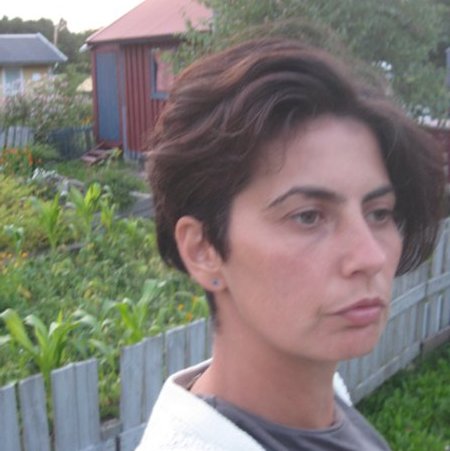
    Evie Papada

    Whilst Campaign Coordinator at Amnesty International

    Who is the campaigner you admire the most?
    The campaigner I admire the most is Sarah Duthie. She is a campaigner at Greenpeace.

    Apart from your current organisation which other organisation that campaigns do you currently admire?
    ‘War on Want’- They seem to campaign on very topical issues and they have the most updated campaign calendar: the messages they send through are original and it urges you to take action.

    What advice would you give to someone starting their career in campaign today?
    I would urge them to remind themselves that we campaign in order to foster change and not just to raise awareness on issues – i would also advice them to spend enough time planning their campaign strategies and always evaluate the work at different stages of the campaign development.

    What 3 things make a good campaigner?

        Good preparation and planning of the campaign strategy.
        Creativity and boldness in decision making.
        Ability to deliver the campaign message in such a way that it is simple, catchy, using as few words as possible.

    Which of these three things do campaigners have most of?

    Campaigners have all of the above things to a lesser or greater extent – campaigning is both an art and a science, so campaigners tend to be creative and also good at creating thorough plans and effective strategies.

    Which of the 3 is missing the most…

    Most campaigners are not paying enough attention to the preparation and planning process – as they tend to apply strategies that have proved successful in previous campaigns but they don’t necessarily work for all campaigns.

    Are organisations getting better at campaigning….

    There are more campaigning tools out there now and new information tech has helped those organisation that know how to use them effectively to become better at campaigning.

    If you weren’t a campaigner what would you be?

    I would be a painter or a musician – I would find another way to channel my artistic abilities.

     

  2. Lizzie Jeans

    Leave a Comment

    Lizzie Jeans

    Whilst Campaigns Consultant at End Child Poverty

    Lizzie is freelance campaigner. She was previously Campaigns Manager at Help the Aged and has worked for the Methodist Church, People & Planet and Christian Aid.
    Apart from your current organisation which other organisations that campaign do you admire?
    Shelter, Christian Aid, RNID and YWCA.

    Who is the campaigner you most admire?
    Guy Hughes of Crisis Action and People & Planet. Guy was a fantastic campaigner who was tragically killed in an accident in 2006. I worked with Guy at People & Planet and he was a huge influence on my development as a campaigner – especially the need to think about levers of power and influence. The Sheila McKechnie Foundation has a award for young campaigners in his memory.

    Is there a campaigning organisation that you would like to see the back of?
    The BNP

    What advice would you give someone starting their career in campaigning today?
    Being someone who’s easy to get on with and who delivers goes a long way. Make as many contacts as you can and keep in touch with people. Think of opportunities for collaborative working.

    What three things make a good campaigner?
    Drive and tenacity, strategic thinking and strong networking skills.

    Which of these three do you have most of?
    I can be a good networker and enjoy spotting opportunities to work with others.

    Which of these three do you think is missing most out of people who campaign or want to?
    The ability to always be thinking strategically at where you want to achieve change and looking at the balance of power, appropriately targeting your chosen audience at key times, where you can have most impact. Campaigners, including myself, often have so many demands, you can lose sight of your key objectives.

    Generally are organisations getting better at campaigning since you began your career? If so, what’s changed?
    More organisations are campaigning and there is a more crowded market. The public has a greater understanding of campaigning but is also more savvy about campaigning techniques. However, despite the increasing number of organisations who have campaign supporters, it is the same few organisations who are are able to genuinely mobilise large numbers of people to demonstrate.

    If you weren’t a campaigner, what would you be?
    A journalist.

  3. Meeting Wangari Maathai – environmental and social activist

    Leave a Comment

    The death of Wangari Maathai on 25th September 2011, took me back to the day I was fortunate to meet her. It was the same day as Live 8 Day in 2005.

    At the time, I was the Mayor of Islington and for my year in office, I had a theme – a small campaign to try and affect public attitude in the borough. I called it “International In Islington”, where we celebrated different countries and regions linked with Islington – through our residents and the work done in the borough.

    And to take the fact that we are international positively, instead of the negative outlook that some newspapers had and still have today.

    That day I had three events to attend under my international theme. The first one was to celebrate Africa In Islington. The 2004 Nobel Peace Prize Winner Professor Wangari Maathai attended the African Diaspora and Development Day, held by the charity AFFORD on Holloway Road.

    Professor Maathai was a member of the Kenyan government and was internationally recognised for her persistent struggle for democracy, human rights and environmental conservation. She had just became the first African woman to win the Nobel Peace Prize.

    The Honourable Professor Wangari Maathai was the Assistant Minister for Environment and Natural Resources in Kenya. She was also the Founder and former co-ordinator of the Green Belt Movement.

    I managed to spend some time talking to her in the “green room” before the event. For me, as someone who had spent 2 months in Kenya & had just finished working for the World Development Movement, meeting WangariMaathai on Live 8 Day at an African disapora event was tremendously special.

    Like all the best campaigners I’ve ever met, she was utterly optimistic, she once said:
    “I have always believed that, no matter how dark the cloud, there is always a thin, silver lining, and that is what we must look for us.”

    If you care about campaigning, I can recommend her biography – but if at least Google or Wiki her and find out more about this important woman.

  4. So what next?

    Leave a Comment

    I recently returned from Germany where I led an advocacy capacity building session for an NGO, and as I have often remarked in the past in a room full of different nationalities, there really is a common international language of advocacy campaigns.

    I was also struck at how the big challenges in this work are also common. For me in my day job at the Refugee Council I am forever boring my colleagues about the importance of momentum in successful campaigning. Getting a sense of momentum and progress with a campaign is just so important but also so hard sometimes to achieve.

    During the session in Germany, we talked about the huge internal effort that can sometimes go into producing a report, developing key messages and then maybe holding a press conference. Once that has been achieved and a few press headlines garnered, it is tempting just to collapse with all of the energy used up.

    But this is just the start of something in advocacy terms – how is the report, messages and press coverage going to be used to energise the broader campaign for the impact you are seeking?

    I have been heavily influenced, as I have written before, about the importance of a theory of change in advocacy campaigning. Now this sounds really complex but it can be as simple as developing a road map for how you want to see your issue take off. And you can be helped by those two little words ‘so’ and ‘that’.

    So I found towards the end of the session that people were talking about an advocacy activity like a press release or a lobbying meeting, then pausing before linking up the sentence with a ‘so that’ and going on to list future advocacy activities.

    I know it all sounds so simple. So simple that I know myself from my own practice that we don’t always get around to doing so.

    At the Refugee Council we have identified our four key advocacy priorities for action (and in case you’re interested they are: destitution, detention, housing and legal support to asylum seekers.) And we are now beginning to develop our theories of change for each issue, fuelled by some research and beginning to map out how we want these issues to take off.

    So next time you find yourself talking about an advocacy activity don’t just stop there – pause, say ‘so that’ and then continue with your aspirations. I am convinced that one enemy of effective advocacy campaigning is a lack of momentum – but a persistent use of ‘so that’ can be a very powerful remedy. What do you think?

  5. Building capacity for advocacy campaigning

    Leave a Comment

    What is the best way to help train campaigners? Is it a week long course? A day course at regular intervals? Mentoring support? A peer group?

    There is clearly no one answer but it is one question that has been much on my mind recently. A year ago at the Refugee Council, we ran a campaign training course for refugee leaders in London. We got good feedback for our training but despite this feedback, the course participants then found it hard to develop their campaigns. We offered mentoring support focussing on the individual organisation and the campaigning activity took off.

    Our reflection on our learning was that while our training had been ok, it had been offered at an abstract level and had not been rooted in the daily experiences of the organisations. We are about to engage in year 2 of this project and this time around we will be focussing both on developing the capacity of the organisations as well as developing their campaigning skills.

    Campaign training cannot exist in a vacuum – it has to be applied to the reality of the campaigning environment, both internal and external, which is facing the organisation.

    It did make me reflect that as an activist learner, I was far more focussed on running campaigns and delivering campaign training than on the practical day to day realities for the organisation. But when I paused for thought it has always been the internal dynamics that have presented the biggest challenges to my campaigning.

    So when I had the chance to hear Chris Stalker talk about his new praxis paper for INTRAC on capacity building for advocacy, I knew after my recent experiences that I had to be there to hear his conclusions. His presentation was very helpful to my thinking and his paper has just been published – see Intrac

    Do make sure that you have a look at this paper; it contains plenty of food for thought and has helped me to think about this issue.

    And a few months ago when I ran the advocacy and policy influencing course for INTRAC to an audience of NGO staff from across the globe, I was keen for Chris to come along as a guest speaker. I was interested to see how his message went down so well with such a diverse audience. From their positive feedback this is clearly an issue whose time has come.

    How are you approaching capacity building for your advocacy work?

  6. Charities should challenge politicians’ view of them

    Leave a Comment

    The article “Donors Will Reject Charities” refers to comments form a Canadian charity law expert. He spoke at a European-wide conference stating that donors in 10 years time will question whether charities are worth funding as they don’t solve social problems, but simply make things more tolerable.

    I think we need to note that his comments may not be directly applicable for the UK. He spoke at a European event and he is from Canada. But in the UK, particularly over the last 12 years, charities are tackling the root causes of social problems – ever increasingly so.

    Charities are campaigning more, working on public affairs better & increasing their engagement on the parliamentary level. And the general public, including donors, are more and more open to campaigning as the most effective way to change our society & our world for the better.

    Those of us who care about the campaigning sector just need to counter those politicians – often the target of our campaigning – who wish to see charities as inoffensive, cuddly organisations and even want to use charities to financially off-set some of the responsibilities of the state.


  7. Don’t lose the fire in your eyes

    Leave a Comment

    A while ago I led an advocacy campaigns training course about how to work with the UK Government and Parliament. As part of that course, the group went across to Parliament and met with a Conservative MP to hear directly from him about the role of the MP.

    One of the questions that the group asked the MP was: what do you look for when some-one comes to see you? His reply was interesting. He said firstly he would look for a local connection to his constituency. Fair point. And then he said something that really surprised me. He said that he also looked for fire in some-one’s eyes. And if they had passion about their issue, he was more likely to engage with them and to take them seriously.

    Fascinating. A lesson there for all of us campaigners and certainly for me. I just know if you are working in a large bureaucratic organisation, it is sometimes easy to lose that passion and sink into the reality of working in a complex organisation. Yet there is an irony here because for all these large bureaucratic NGOs, they all started small with a burning desire to achieve change – that is why they were formed.

    So while we talk about the need to professionalise campaigning, and I have been very involved with many others in developing campaign training, one thing is central and should never to be lost: don’t lose your passion and the fire in your eyes. It is one element that makes me love working for the voluntary sector – that you can show your passion.

    I started my career in the NHS. And towards the end of my time there, I received an unsolicited piece of career feedback from my boss. He said to me if I was going to get on, I would need to leave my conscience at home. I decided I couldn’t do that and it led me to leave the NHS.

    But after all my years in the voluntary sector, bringing my conscience to work with me, this was a real reminder and a note to myself: don’t forget to keep the fire burning in your eyes!

  8. Developing your theory of change

    Leave a Comment

    A couple of months ago I was involved in running the residential weekend for the Sheila McKechnie Foundation award winners.

    We had gathered the award winners together and over the course of a long weekend attempted to cover some of the key points in campaigning – reflecting on both success and failure. I am always struck when doing these events at what things work with different groups.

    This time talk about developing a theory of change for a campaign seemed to resonate with people. This was nothing complicated but using the simple device of ‘so that’ to create a chain of events to demonstrate how you see your campaign unfolding. Those two little words ‘so’ and ‘that’ can help you link your campaign actions together and show how your issue can take off. Basically, it works in this way… we are going to do something so that something else happens so that etc. Simple, but effective. Try it on your issue.

    When I started off campaigning I think that I created a theory of change chain in my head; what I have come to realise is how important it is to write it down and then use your words to review progress and reflect on your learning. Indeed one of the most simple monitoring and evaluation approaches for campaigning is to spend time reviewing your theory of change:

    • What happened?
    • What was different to what you expected?
    • What have you learnt from this experience?
    • What will you do differently?

    And then a while later I was involved in an advocacy training course for INTRAC – the international NGO training and research centre. What I love about these courses is that INTRAC is able to pull together people from across the globe, who have a common interest in campaigning and seeking policy change. We had people from Thailand, Middle East, Timor Leste, Tanzania, Ethiopia to name just a few places. Again I was struck by how the theory of change model seemed to help people.

    We discussed how to pick the right issue to run with when you are developing an advocacy campaign, and our conclusion was that if you can develop a good theory of change chain of events, you stand a good chance of developing a real sense of momentum on a campaign. And campaigning is nothing if not developing real momentum.

    If you are interested in reading more about this issue, and many other things as well, you should take a look at Brian Lamb’s new ‘Guide to campaigning and influencing’. I should add that I am not on commission, but I did read this book recently – and it does pull together all the key elements of campaigning information very neatly. It’s well worth a look!

  9. Definitions

    Leave a Comment

    When I have run advocacy campaign training in the past, an early obstacle can be the issue of definitions.

    So when I was at a conference recently in Manchester, I was very taken by the definitions offered by Justin Nsengiyumva from Refugee Action who runs their TRIO project.

    Firstly he suggested that a policy is a plan, course of action or set of regulations adopted by government, business or an institution designed to influence and determine decisions or procedures. He argued that a policy is what a government or institution decides to do or not to do.

    He then suggested that advocacy is the deliberative process of influencing those who make policy decisions.

    Within this definition, he suggested that there were several key ideas:

    Advocacy is about influencing those who make policy decisions by making full use of all the advocacy tools available. It is not always just about being confrontational.

    Advocacy is a deliberative process involving intentional actions and therefore you must be clear who you are trying to influence and which policy you wish to see changed.

    The policy makers encompass many types of decision makers and we should never forget in our advocacy strategies that policy makers are human beings too.

    Finally Justin highlighted three concepts that underpin the need for advocacy campaigns:

    1.      To create policies where they are needed or none exist

    2.      To reform harmful or ineffective policies

    3.      To ensure that good policies are implemented and enforced

    What do you make of this approach? Is it helpful to your planning?

  10. The need for campaigning focus

    Leave a Comment

    Last month I had the opportunity to go over to Warsaw to run a two day training course over a weekend for Polish NGOs.

    The brief for the workshop was fairly clear: to run an introductory session on campaigning to inspire and motivate the NGOs. As ever with these international workshops, and as I have blogged about before, I was slightly apprehensive – would my campaigning rhetoric resonate in a Polish context?

    Yet as ever I found that the language of campaigning is truly global; it really is an international language. I found people who had a burning desire to achieve change, were focussed on the problem and the solution, knew who their targets were and were keen to think about relevant campaign messages. And when I talked about planning for that moment of campaign success, they were with me again and were keen to think about how they could build in such planning to their overall campaign planning.

    But on the second day, one of the delegates came up to me and said that I had changed her thinking about campaigning. I was surprised as the group had seemed to be with me, but I asked her what she meant by that phrase. She said that she had been challenged by my insistence that campaigners needed to focus – to pick an issue and then stick with it to achieve change.

    She said that she was now going to have to go away and re-think: what was their focus going to be? But she also knew that this concept of focus would be hard to promote in her NGO.

    I was keen to respond that it is good to have your menu of things you want to see changed – never lose that policy shopping list. And always be on the look-out for opportunities to raise any of these issues. But focus is so important for effective campaigning. By all means use opportunities but do not lose sight of your primary focus and keep chipping away. There is always such a temptation to run with a variety of issues – but remember to focus.

    And focus was also the key theme when I was in Manchester recently running a campaigning workshop for a dynamic group of refugee campaigners. We listed all of the injustices facing asylum seekers at the moment and came up with a long list of issues. In the refugee sector we are not short of things to campaign on – the challenge that they were left with was: what would be their campaigning focus?

    So what is your campaigning focus at the moment? Do you have a focus for your campaigning or are you trying to run with a basket full of campaigns?