

Author Archives: Jonathan Dearth

  1. Penelope Gibbs

    Leave a Comment
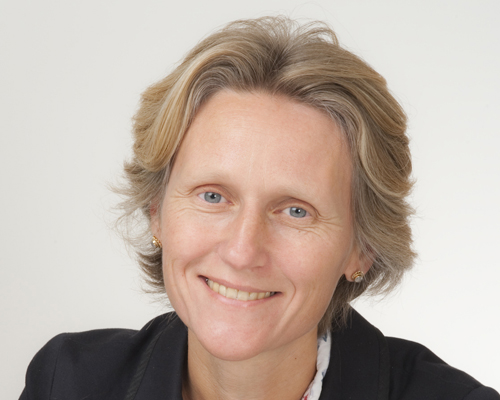
    Penelope Gibbs

    Director of Transform Justice


    Apart from your current organisation which other organisations that campaign do you admire and why?

    Policy Exchange – because whatever one thinks of their views, they have succeeded in getting the ear of this government and have influenced policy profoundly. They have championed police and crime commissioners and the breaking of the public sector “monopoly” over probation services. Without them these things might not have happened. I admire them because they are effective, though they probably wouldn’t describe themselves as campaigners.
    Citizens UK for campaigning for the Living Wage. They have argued well, got good evidence and successfully used community organisers as advocates. A worthy cause slowly and steadily won, mainly through face to face contacts and meetings.

    Generally are organisations getting better at campaigning since you began your career? If so, what’s changed?

    Organisations are getting better but the political space is getting more difficult to influence. MPs and Peers are efficiently whipped and few will defy their party.
    E-campaigning has revolutionised campaigning through helping charities to harness the passion of thousands of supporters. It’s a double edged sword though, because the more mass e-mail campaigns there are, the more difficult it is to break through.

    Which campaigner inspires you most?

    Ray and Vi Donovan’s son Chris was killed by a group of boys in horrible circumstances. Ray and Vi met their son’s killers in a restorative justice conference and felt “free” for the first time in years. They have set up a trust in memory of Chris and tour the country talking about their experience and the power of restorative justice. Ray and Vi truly have created good out of bad.

    What three attributes make a good campaigner?

    Passion
    Guile
    The ability to understand other points of view

    What’s the most rewarding or exciting campaign you’ve worked on and why?

    The Out of Trouble campaign I led for the Prison Reform Trust was very rewarding. The aim was to reduce the number of children and young people imprisoned in the UK. During the course of the five year campaign, the number of under 18 year olds imprisoned in England and Wales reduced by a third. A sign of true success is that the campaign ended in September 2012 but the numbers have continued to fall ever since.

    How do you feel campaigns will change over the next five years?

    I hope campaigns will focus less on changing the law. Legislation is very powerful but changing legislation does not necessarily produce social change and vice versa.

    What advice would you give someone starting their career in campaigning today?

    Be incredibly focussed. Campaigns with vague, amorphous aims tend not to work. Remember achieving your aim is the most important thing. It doesn’t matter if no-one knows who or what organisation was behind a positive social change, as long as it happens.

    If you weren’t a campaigner, what would you be?

    A civil servant. Civil servants have more power to influence positive social change than anyone else in government. But I would need to be able to conform and I’m not convinced I could.

  2. Monitoring and Evaluating Advocacy

    Leave a Comment

    Whenever I have run a training session on advocacy campaigning, I have felt a loss of energy and momentum when I have turned to the subject of monitoring and evaluation.

    As an activist, very often training a room full of fellow activists, I am most interested in sharing the tools that will encourage people to tackle injustice and develop campaigns. But I also know that campaigning is not just about doing stuff, but it is about making a difference.

    So I was really interested at the British Red Cross, when we started to discuss as a new advocacy team how we would want to approach the monitoring and evaluating of our own advocacy. I have written before about the power of using a theory of change approach – a simple chain of events connected by the words ‘so that’ – and then regularly reviewing progress against this theory of change.

    But I was challenged by one of my research colleagues to take a look at the UNICEF monitoring and evaluating advocacy guide – see here.

    I began reading it with a feeling of ‘I’ve seen all of this before’, but the more that I read, the more interested I became – in particular I was interested in their development of a log frame for advocacy. Part of me rebels against a chart with a series of boxes – advocacy cannot be tied down to just one page, surely?

    But the more I looked at their log frame and began to apply it to one of our own advocacy issues, I was surprised at how easy it was to complete and that it was actually a very useful exercise. I liked the structure of goals, interim targets and activities, and I liked how the log frame made you think about how you wanted to move your issue on. I found that the answers to all of these questions were in my head anyway, so it wasn’t too hard to put it all into the log frame.

    But above all I felt that this log frame structure fitted with my own approach to advocacy – it didn’t feel contrived or an add-on. We are going to use this approach more at the British Red Cross – do take a look yourself at the log frame approach – and I’d be interested in what you think.

  3. Letter published in Third Sector 17th January 2012

    Leave a Comment

    To hear it click: http://bit.ly/AjF6uF

    To read it….. here it is:

    Cathy Pharoah is correct in noting in her article “Charities can make a difference…” when she says that “…there are signs that the sector is increasingly rediscovering the power of advocacy”

    Charities despite smaller budgets are realising they can get a better return on their investment to reach their aims and goals by turning to advocacy and campaigning tactics. The change has been happening for a few years – began slowly in the late 1990’s then really took off around 2005 – Make Poverty History played an important role in this.

    We see new campaigns and charities investing in policy analysis and development then using it to make change by using campaigning, public affairs and parliamentary tactics. As a result, we’ve increased our staffing to cope with this by over 70% and moved into larger premises.

    It is a real shame that at a time where this expansion in campaigning is occurring that the NCVO’s Campaigning Effectiveness team which supported the sectors work no longer exists. There is a gap that needs filling if anyone is up for taking on the challenge.

  4. It’s a 5 horse race – 4 months to go to the General Election

    Leave a Comment

    As a former local Councillor, I’m used to regularly delivering leaflets saying “It’s a Two Horse Race” with a cheesy pencil drawing of racehorses and claims that it’s between our party and the main other party. Making out it’s going to be close, even if the end result is a 20-30% difference in the votes. All with the aim of getting your vote out on the day and to stave off complacency.

    Well no-one is going to be complacent about the result of the polling on May 7th. It’s looking like a 5 horse race – the usual 3 equines, plus UKIP and the SNP. Only the Tories or Labour can win it. But the other 3 parties will play a major role in who will get past the finishing line and actually into government.

    Some relevant pieces to read on how to deal with this year from a campaigning perspective. Tom Baker, the self-styled “Thoughtful Campaigner” who The Right Ethos helped place last year at BOND as their Head of Campaigns and Engagement has written this piece: 7 things you need to know about election campaigning.
    Also, worth reading: Three Predictions for Charity Campaigns in 2014 by Claremont Communications: Predications for charity campaigns in 2015.

    And worth knowing about Oxfam wrap on the knuckles before Christmas for being – though I hope it won’t rein any campaigns in too much as a result Oxfam criticised by charity commission.

    Pollsters are being cagey about the outcome, they remember 1992 too well, when most predicted a Labour majority. Sometimes it’s worth looking at what the bookies think as they can’t afford to be wrong.

    The current odds of 25 to 1 on a Labour/SNP/Liberal Democrat coalition looks quite an attractive price to me.
    Looking beyond the election, what if the Liberal Democrats got back into government with 6 times the number of seats of UKIP but only around half the votes. A massive campaign for a fairer voting system from the right wing?
    2015 – It’s going to be very interesting.

  5. Supporting Advocacy in East Africa

    Leave a Comment

    I am just back from a week in Dar es Salaam, where I was running an advocacy workshop for an INGO and its partners across East Africa.  We had eight nations represented from across the region. This workshop was following on a year after a similar workshop I had run for their Asian region in Bangladesh. The training had worked in Asia but would an advocacy campaigns framework also resonate in East Africa?

    What was really impressive about this workshop was the degree of preparation that delegates had to do prior to coming to Tanzania. I have run some courses where people have given little thought to the issue that they might want to use for advocacy. This workshop had case studies from each delegate submitted before the event. So we had an impressive course reader detailing each person’s advocacy issue against a suggested framework. We had issues such as trail bridges, self-help groups, disaster risk reduction schemes and much, much more. What did interest me was that in the main they were projects where an idea had been made to work on a pilot basis. At the end of each case study was a short section entitled next steps. Generally this section was very brief. The purpose of our workshop was to help people to develop their next steps and therefore have more impact.

    We spent a lot of time in the first couple of days getting participants to describe the realities of their external enabling environment for advocacy: the environment in Kenya, being different to Mozambique, being different to Ethiopia. We were massively helped in this exercise by the presence for a while of Maina Kiai – the UN special rapporteur on the rights to freedom of peaceful assembly and of association. He is an inspirational speaker with an amazing global perspective. If you ever have the chance to hear him speak, you must do so!

    As with our workshop in Bangladesh, I was interested to see how the country groups of participants struggled initially to agree how to explain their external environment. There were some very robust discussions. I know that I have written before about how important it is to have these explicit conversations because the danger is that you all assume that you share the same understanding. Having secured agreement in each country group, delegates were encouraged to move around the groups and hear about the external environment in the other countries. This was a great exercise and ensured that we had a common understanding of the external environment in all of the eight countries.

    Having got this understanding, we then went through defining the problem, being clear on the solution and who the target might be with the power to make this change, looking at the different routes to influence this target, assessing the degree and the nature of the opposition, before finally beginning to sketch out what a theory of change on each issue might look like.

    At the end of the week, I was interested to see that energy levels were still running high. It was also interesting to see that while they were keen to take their initial theories of change back home to discuss with their colleagues, there was also a strong desire to keep the peer group from the eight nations together.  There is a group Skype conversation planned for later next month. Yet what really excited me was a group of passionate individuals from across East Africa with their burning desire for change on their issue fired up with some practical tools to help energise their advocacy campaigns.

    Postscript

    In my last blog I highlighted the plight of Sombath Somphone, the community leader from Laos who disappeared in highly suspicious circumstances in 2012. I did, as I implored you to do, and I wrote to my MP about this case. I received a very detailed answer from the Minister of State at the Foreign and Commonwealth Office. Not only did he know about this case, he had raised it on several occasions and was continuing to do so. This was really encouraging – but let’s keep the pressure up. If you haven’t contacted your MP about this case please do so. We should be prepared to stand up for community leaders who stand up for their community and then suffer the consequences.

  6. Mariam Kemple

    Leave a Comment

    Mariam Kemple

    Whilst Campaigns and Advocacy Manager at Crisis Action


    Apart from your current organisation which other organisations that campaign do you admire and why?

    I’ve recently been inspired by the entire campaigning sector following the collective work we’ve all been doing in response to the ‘Gagging Law’. As someone who has a lot of experience in coalition campaigning, it’s been wonderful to see so many different voices from the UK charity sector speaking as one in a targeted and effective way to push for change.

    Generally are organisations getting better at campaigning since you began your career? If so, what’s changed?

    Absolutely – it’s been very exciting to see this development over the years. Campaigning has become much more professionalised and, with that, we’re seeing a stronger focus on monitoring and evaluation. As a result, the sector is becoming much better at identifying and achieving impact. We’ve also become better at learning from our colleagues in fundraising – building campaigner journeys that ensure supporters around the country can be turned into activists. Finally, the eventual embrace of new technologies – particularly social media – is having a fascinating effect on the responsive capacity of organisations.

    Which campaigner inspires you most?

    I regularly work with Sudanese or Syrian activists who put themselves at serious risk by speaking out on abuses taking place in their country. I am awed by the dedication and bravery they show in doing so – it is a privilege to work with them.

    What three attributes make a good campaigner?

    First and foremost, any campaigner needs to be passionate about their work. This is what you need to influence others, to push on through the long hours and to keep going in the face of disappointment after disappointment. Second, you need to be strategic – able to work out the most effective, efficient route to influencing your target. And, finally, you need to be flexible in order to adapt your strategy to the myriad of unexpected changes that any campaign will encounter.

    What’s the most rewarding or exciting campaign you’ve worked on and why?

    In March 2012 I ran a social media campaign for the first anniversary of the Syrian conflict – Unite for Syria. We had no budget and no time but through sheer hard work were able to convince activists and celebrities the world over to support a multimedia campaign. On the day, we reached millions upon millions of people and the campaign itself became the story. It was wonderful to create something from literally nothing and to create a global community of activists all working together – from Brazil to Indonesia, India to South Africa, Egypt to the US.

    How do you feel campaigns will change over the next five years?

    I hope that campaigners will continue to be more and more driven by monitoring and evaluation. I also expect that the medium for our tactics will change as the sector catches up with all that the internet has to offer. That said, I still believe that the core components of campaigning will remain resolutely the same and that the strength of a constituent’s handwritten letter to an MP will always be one of the most powerful tactics we can deploy.

    What advice would you give someone starting their career in campaigning today?

    Immerse yourself in the campaigns of the whole sector – sign up to every newsletter and campaign bulletin! Get a feeling for how different organisations engage their supporters, the ambitions they set for themselves and the success they obtain. Make sure you have experience of local campaigning – volunteer in your community and experience the day to day of influencing local institutions and decision-makers. Finally, I would encourage anyone to work in Westminster for even just a short period of time in order to understand the ‘other side’ of campaigning, so that as a campaigner you appreciate the environment your targets will be working in.

    If you weren’t a campaigner, what would you be?

    A legal barrister – I’d still have to be arguing for a living!

  7. Head of Resources and Enterprises – Full-Time, permanent £40k – Margate, East Kent

    Leave a Comment

    Turner Contemporary Website

    Since 2011, the Turner Contemporary has been one of Kent’s, the south-east’s and Britain’s most exciting assets in the visual arts scene.

    This role requires a driven person with passion and a commitment to contemporary arts. Also, the individual needs the skills and abilities to fully utilise the assets of the gallery – the spaces, the café, the shop – to maximise income in order to continue to provide free entry to anyone who wishes to enjoy the exhibitions.

    The individual must be entrepreneurial in their approach, but politically aware to the environment and sector that they are working in. As well as the commercial side, this role is responsible for overseeing the operational side of the organisation – its finances, human resources, IT and administration.

    The role:

    Lead the long term strategic business planning, income generation and policy development for Turner Contemporary.

    Ensure the effective, efficient and entrepreneurial operation of Turner Contemporary Enterprises and to review and improve our commercial strategy to maximise our ability to generate income.

    Responsible for the management of the financial, commercial, HR, administrative, and legal functions required to operate Turner Contemporary (charity) and Turner Contemporary Enterprises.

    Take strategic responsibility for the financial well-being of the organisation.

    Manage change within the organisation and support the development of the staff and Board.

    The candidate

    Entrepreneurial business skills applicable to an ambitious not-for-profit organisation with significant commercial activities.

    You will be a visionary, with strong creative ideas that translate into real achievable business plans.

    Good political nous and the ability to build credibility within the organisation and with senior stakeholders and partners.

    Will have significant relevant experience of strategic business planning and operational practices.

    Significant experience of finance, financial control setting, monitoring and managing budgets.

    Extensive experience of managing staff and associated employment issues.

    Deadline: Friday 21st November 2014

    To apply or for more information please contact Sonya Clampett at sonya@therightethos.co.uk

  8. Where is Sombath?

    Leave a Comment

    Something a bit different for this blog…… I recently spent some time working in Bangladesh running an advocacy training course, and met some people from Laos. They informed me of the disappearance of Sombath Somphone back in 2012. Sombath is a respected community leader in Laos. He has not been heard from since his disappearance.

    I understand that his wife was shown video footage by the police of him being stopped by the police, and then being put into another vehicle before being driven away. The policemen who showed her this video have subsequently disappeared. The government in Laos has refused to engage on this issue, explain this video footage or take up international offers to analyse this video footage.

    This case of Sombath has really affected me. How can a citizen of a country just disappear and the government of that country show no interest in his return? I would really interested to know if our Foreign and Commonwealth Office is aware of this case, and what representations our government had made to the government in Laos and to the ASEAN nations. I have written to my MP to ask these questions – could you do the same and stand up for a community leader, who had the courage to stand up and represent his community at huge personal cost?

    For more information see http://sombath.org or https://www.facebook.com/findsombatsomphone

  9. Building a movement

    Leave a Comment

    In recent years I have increasingly heard people talking about movements in the context of campaigning. Not content just with an organisation or individuals seeking to run a campaign, a wider more ambitious aspiration can emerge to build a movement pushing for change.

    Influenced no doubt by the experience across the Atlantic in the US where many funders have embraced the rhetoric of movement building, this language has crept into the UK. Although this may be an incorrect assessment – it may be better to say this language has re-emerged into the UK. What was the pressure to abolish slavery, form trade unions, get women the vote if they were not movements? Movements have surely played a crucial role in the history of the UK.

    In their article on How foundations can support movement building, Masters and Osborn look at social and political change and the role that movements can play in pushing for change. They argue that:

    “While there is no formula for a social movement, we know that successful ones share some things in common. First, people become mobilized around issues they hold dear; at some level they share a powerful vision about what is wrong with society and how it must be improved; and they engage in lots of diverse activities not under any one leader’s direct control resulting political motion and its effect lead to a change in attitudes, practices and public policy.”

    I am very attracted to this notion especially where you are looking for major political, social or economic change. A campaign can push for a specific policy or practice change, a movement, being more free flowing and diverse, can generate broader activity maybe harnessing different campaigns and approaches with the same over-arching goal.

    In the UK context I am struck by the number of people who have been talking about the need to build a movement in defence of asylum seekers and refugees. While there have been many campaigns run on specific issues, a feeling has developed, due to the prevailing political and media environment, that we need a broader movement to offer a positive counterpoint.

    For the past few years I have been involved in the City of Sanctuary movement. Starting in the great city of Sheffield in 2005, local people came together to provide welcome to asylum seekers arriving in their city. From this inspirational move, we now have over 40 cities and towns of sanctuary across the UK, we have schools and health services expressing support, more and more communities expressing solidarity and interest from across Europe.

    I have been fascinated by this development. In the face of such a negative political and media environment, the development of cities of sanctuary has been such a positive antidote. You just cannot ignore local people coming together motivated to do their bit to support asylum seekers and refugees.

    Yet this in itself is not enough to create a national environment for a culture of welcome across the UK. For this reason support has been building for a sanctuary summit from organisations like Refugee Council, Refugee Action, the Forum, Boaz Trust, STAR, Still Human and many more.

    On 15th November 2014 people will gather in Birmingham from across the UK for the first Sanctuary Summit. The criteria for attendance will be simple: the power to represent a community and/ or the energy to campaign. Grounded in eight policy concerns, we hope to bring a diverse collection of people together to encourage their own local expressions within a loose national movement. We aspire to offer the space and structure to inspire activity but for it all to be linked up.

    We got a taste of what is possible in Parliament earlier in September when local groups from across the UK came to Westminster to meet their MP and talk about how they welcome asylum seekers in their community. The Sanctuary in Parliament was a great success.

    These are lofty aspirations to build a movement for sure but also exciting – will this Sanctuary Summit succeed in bringing people together united by a common vision, encouraging local and national actions all pushing to achieve the change for a culture of welcome in the UK?


  10. What MPs want?

    Leave a Comment

    I’ve just read a study on MPs’ views on charities’ actions by nfpSynergy.
    Given that it took 3 individuals to email 154 MPs how acceptable it was to for charities to undertake the 6 different activities listed below it left me a bit cold. Especially as the report was given such an ostentatious and grandiose title of “Charity Parliamentary Monitor” – phew, pretty impressive, eh?
    The 6 charity activities in the report that MPs had to say were acceptable or not were:

    1. “challenging government policy”
    2. “holding a parliamentary reception”
    3. “highlighting the effects of a policy on its beneficiaries”
    4. “challenging the policies of political parties”
    5. “a state-funded charity challenging government policy”

    A bit of analysis by one of the 3 “box-tick counters” or someone else from nfpSynergy would have been useful.

    I’m not sure what the point of the study is – what inference we’re supposed to take from these figures. Are charities supposed to turn around and say, “look only 42% of Tory MPs think its ok for us to challenge government policy -maybe we should think again about doing anything”

    Or 90% of MPs think it’s acceptable to hold a parliamentary reception so that perhaps charities should be holding one every fortnight.

    If someone is attacking you, your beneficiaries and what you believe is right and committed to campaigning about, shouldn’t you consider perhaps doing more of what they say they don’t like rather than trying to please them?

    And is it that important what MPs say on what’s acceptable? Isn’t it much more important to assess how MPs respond to the campaigning actions of charities, learn from this and adapt your actions for the future to gain more campaigning success?