Author Archives: Jonathan Dearth

  1. Seeing Job Shares as a positive, not a problem

    Leave a Comment

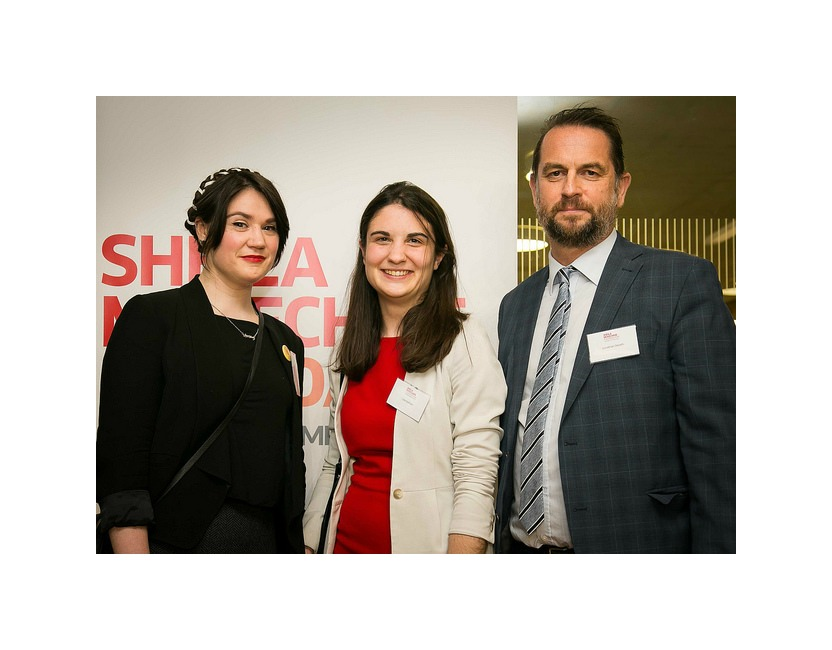
    I set up The Right Ethos recruitment consultants in 2007 after 13 years working for organisations including Shelter, Save the Children and PLAN International. I was invited to speak at the Jobsharing Network Meeting on 26th April 2017 by Katherine Nightingale and Alice Allan, who Jobshare the Head of Advocacy and Policy at CARE International. The audience was a mix of Job Sharers and HR managers from leading international NGOs in the UK.

    In an increasingly competitive market for top talent, charities and campaigning organisations need to be more creative with their hiring strategies. Quite often recruiting managers and human resource teams see anything non-conventional as a problem, rather than seeing and understanding that it can be a real positive.

    It is not only an issue for Job Share applications, but it also covers other non-conventional issues in recruiting. This includes older candidates, candidates moving from other sectors, and candidates with experience from other countries.

    This reaction against non-conventional candidates creates conservatism, with a small “c” in the sector. Quite often this means that the candidates selected for interviews are just junior versions of the recruiting manager. Therefore, the sector generally ends up with Individual, rather than job share candidates; 2-5 years younger than the recruiting manager, with similar (but less) UK based experience.

    All these restrictions act as negative filters that reduce the field of potential candidates whilst also damaging the opportunities for such applicants. However, what I really care about is that it damages the organisation as it reduces the chance of appointing the best people for the job. But to reduce this conservatism it needs to come from the top.

    So it is truly great that the Chief Executive of CARE International, Laurie Lee is involved with this project. It says a lot to Laurie’s and CARE International’s progressive understanding of the issue that he is involved.

    The conservatism in charity recruitment will be reduced if staff are positively encouraged by charity leaders to not discount non-conventional candidates too quickly.

    In terms of Job Share candidates, positive policy statements need to be made. Then they need to be shared, by discussing them and regularly reinforced to get a common understanding of the benefits that a Job Share can offer.

    Also externally, particularly for hard to recruit jobs, adverts could state that Job Share applications would be welcome.

    Only 6.2% of quality job vacancies are advertised with options to work flexibly. This compares poorly with the high demand for flexible work – 47% of the workforce want to work flexibly in some way.

    Additionally, there could be versions for job shares on application forms. Job Sharers could be rejected at application stage purely because an application form cannot accommodate the prospect of two people applying for one job.

    The issue for Job Shares is not just in recruitment – but this is where the biggest challenge lies. There also needs to be a progressive approach to allow Job Shares to happen for an organisation’s existing staff.

    The best route to working part-time in a job share is to go from full-time to part-time or to be in the right place for recruiting candidates for the other part of the job share. However, charity leaders need to be more open to this and appreciate the benefits.

    Charities wanting to maintain their leadership pipeline can’t afford to lose strong talent, especially their women, who generally make up the majority of their workforce. But job shares are not exclusively women – they are also parents, carers and disabled people.

    My main concern and the reason behind why I want to see change is that not maximising job sharing is bad for the organisations. But, having worked for Liberty and Amnesty International before starting The Right Ethos, I care about the rights of the individual too.

    Lack of job shares is unfair on the individual. Part-time workers earn less per hour than their full-time counterparts at every level of qualification. Highly talented people who need to work flexibly cannot do so at their level so are taking jobs below their level in order to find work that matches their needs. Even worse there are highly talented people who are not working but seeking part-time work.

    A progressive approach led by trustees and senior management is required – based on the primary, self-interested, motivation being the best talent available for the charity or campaigning organisation is maximised.

    This proactive approach will make HR and recruiting managers feel comfortable about promoting Job Shares. And not feeling that Job Shares applications are causing problems for their bosses and colleagues.

    And as you may be able to tell, I have my own personal agenda around Job Sharing. Most notably, with regards to the unfair treatment of highly talented individuals and the wasted opportunities that the campaigns I care about, don’t take in not being open to Job Shares.

    However, as a recruitment consultant, I have to work to my client’s agendas, not my own. So The Right Ethos ends up having a more conservative attitude to recruitment than we would wish to have. We do try and slip in unconventional highly talented candidates – but more often than not they get caught in the net of conformity.

    But there is some legislation that will hopefully focus the mind of senior management when it comes to flexible working.  From 6th April 2017, all businesses and charities with more than 250 employees are now legally required to collect data on the gap between the average hourly pay of the men and women who work there.

    Closing the gender pay gap will have a positive effect on the workplace as a whole in many ways, from basic issues of fairness and the benefits of a diverse workforce to the importance of having pathways that support women into senior roles.

    Here is an excerpt from the House of Common’s   Women and Equalities Committee’s 2016 report:

    “Flexible working for all lies at the heart of addressing the gender pay gap… A large part of the gender pay gap is down to women’s concentration in part-time work that doesn’t make use of their skill…. Old-fashioned approaches to flexibility in the workplace and a lack of support for those wishing to re-enter the labour market are also stopping employers from making the most of women’s talent and experience.”

    So for employers who are keen to address their gender pay gap, taking action to improve their flexible credentials is an excellent place to start.

    People who work in a flexible way tend to outperform from a productivity point of view and tend to stay longer and are more loyal. It’s not just about attracting talent but retaining it.

    It’s 2017 and things have got to change. Thus, I hope this group can play a major part in helping change things for fairness to individuals and for the good of the charity and campaigning sector.


  2. Sarah Corbett

    Leave a Comment

    Sarah Corbett

    Founding Director, Craftivist Collective

    What do you do?

    Everything! But I do also have wonderful volunteers who help at craftivism workshops and events. Plus, when I can, I subcontract photographers, filmmakers and designers to help me turn my visions into the best reality possible.

    What job did you want or think you would be doing when you were younger?

    I wanted to be an artist, carpenter and run ‘Corbett’s Cosy Café’ on the weekends.

    Who in the sector do you admire the most?

    So many! The Godfather of the UK charity sector Duncan Green obvs. The fearless Control Arms Director Anna Macdonald. The ‘Thoughtful Campaigner’ Tom Baker. My Scouse Shero Margaret Aspinall of the Hillsborough Family Support Group. The mighty Micah M. White who is a pioneer and critical friend to campaigners globally. If I had to pick one person it would be Ann Roach (IDAT) – she is everyone’s “nin” (i.e. grandmother) in West Everton where I was born and grew up – she continues to campaigns tirelessly for justice where structures and systems are stopping people fulfill their potential in our patch and I often ask myself “What would Ann do?” when I get stuck.

    What are the three most important attributes needed to do your job?

    I call my approach to activism ‘gentle protest’. It’s not weak and passive but about loving and encouraging activism. I would say to be a Gentle Protester you need: 1) To be mindful of the baggage you bring to your activism (whether that’s preconceived views on those directly effected by injustice or those in power) so you don’t let your baggage fog your strategy or cause barriers with those you are trying to engage. 2) Eye for detail – remember that language can be just as violent as physical actions, colour effects our emotions, even fonts can sway people. Be intentional in every element of your campaign from the way you greet people to sending them a follow up thank you letter for their time. Detail matters. 3) Act out your vision – if you want a more beautiful, kind and just world then make sure your activism is beautiful, kind and fair otherwise your campaign is offering opportunity for people to discredit your campaign and cause.

    What’s the most rewarding part of your job?

    I’m going to be cheeky and say two ‘rewards’: 1) Knowing that I helped challenge and change systems of injustice and oppression sometimes in a big way and sometimes small way alongside others. 2) Receiving messages online or in handwritten letters from people who say that they didn’t think they “fitted into activism” as shy, burnout, introverted or differently-abled people until they saw from my work that they could also do activism in a quiet, gentle, slow or introverted way that is just as valued and useful as other forms of activism.

    What advice would you give someone starting their career in a role similar to yours?

    I don’t know any other full time craftivists and I had no idea I would be in this role so that’s a difficult one. But to anyone who wants to be a full time activist I would say do the tough, unglamorous work you won’t get any praise for at the beginning (and throughout your career if/when you can) but lays strong foundations for your future work. e.g. find a way to mobilise people to be at Parliament in Robin Hood Tax outfits giving out fake newspapers to politicians going into work 7am, go to meetings of those directly affected by injustices if you can (or read their stories), listen at the back and ask how you can help them not stand at the front and talk at people. Do everything you are asking supporters to do from meeting your MP to engaging with drunk people at festivals in your muddy wellies. Be mindful of slipping into the obvious campaign formulas without questioning them but also be aware of doing ‘wacky’ things for their own sake that don’t actually help your campaign.

    What is the best thing that you’ve been a part of during your career?

    I loved helping to shape and deliver the DFID-funded Platform2 programme, which engaged 18-25 year olds from ‘disadvantaged’ (I hate that term!) backgrounds in global poverty and campaigning. As a craftivist I feel privileged to lovingly challenge the charity sector (and the charity sector graciously listening) to offer more ‘gentle protest’ approaches within the activism toolkit to supporters and helping many organisations do just that in the charity sector and the arts sector. Such as offering slower forms of activism actions to engage more deeply and critically in the complexities of social justice, creating objects to provoke not preach at people on and offline about injustice, framing campaign asks using positive psychology elements and even offering gifts to power holders to encourage them to use their power for good rather than annoying them where possible. I am very grateful to still work with the charity sector: It’s a safe space to question and challenge each other in a respectful way because we are all part of a common cause.

    What do you think is the biggest challenge faced by organisations like yours in the present day?

    Boring answer but money: My work is about helping people transform into effective activists & campaigners not just to support Craftivist Collective campaigns but also other issues they care about locally and globally and help them think holistically about their impact as a global citizen. I purposefully don’t offer quick transactional actions that are easier to measure quantitative data because I think as a sector we are missing out on deep and critical engagement with people because it’s harder to measure that qualitative data. But grant-givers and individual donors often want evidence of quick and media-worthy wins which stunts the potential impact campaign organisations like mine can have that are less tangible but just as important. (IMHO)

    Aside from your current organisation, which other organisations do you admire and why?

    Greenpeace for always being a catalyst for conversation on issues that are often not in the news until Greenpeace shine a creative spotlight on them, ShareAction for their quieter activism that is often behind the scenes but has had life-saving results. Fashion Revolution for their what I call their ‘intriguing activism’ model that engages fashion-lovers to ask #whomademyclothes directly to brands via social media – their positive, non-judgemental and curios approach to activism attracts the audience the fashion industry is highly influenced by – the fashionistas!

    If you weren’t doing the job that you are doing currently, what do you think you would be doing instead?

    I’ve been an activist since I was 3 (squatting with my parents and community to save local social housing in Everton – which we won), my degree focused on social change through religions and theology and I’ve only ever worked in campaigning and public engagement so no one would employ me! I was a shop girl from the age of 13 years until my first proper salaried job in the charity sector so maybe I could go back into that? In the near future I would maybe like to teach creative campaigning at universities (I do that ad hoc at different uni’s around the world) but only if I could continue to be a practicing campaigner too. Activist for life for sure!

    To learn more about Craftivist Collective, visit the website or follow their campaign on Twitter & Instagram.

  3. Lisa Nathan

    Leave a Comment

     Lisa Nathan

    Programme Manager – Good Work, ShareAction

    Why do you do your job?

    I am passionate about making sure people have the best possible lives at work, but too often big companies aren’t held accountable for creating quality jobs. I’m drawn to the approach of ShareAction in focusing on the investment system because investors, like our pension funds, have an important role to play to help tackle that challenge. Through their influence over the companies they invest in, they have the power to encourage companies to create quality jobs. After all, money talks!

    What job did you want or think you would be doing when you were younger?

    When I was younger, I was more interested in the role of governments than the private sector, so was interested in roles within politics or policy advocacy.

    Who in the sector do you admire the most?

    I’m a huge fan of the work of Sarah Corbett at the Craftivist Collective – she’s a delight to work with and her approach is really moving campaigning forward by thoughtfully and artistically engaging with decision-makers as people!

    What are the three most important attributes needed to do your job?

    For my role, the three most important attributes are: 1) Being able to build strong relationships with a wide variety of people, 2) Being up for constant learning and 3) Being happy with and able to manage a variety of tasks and projects!

    What’s the most rewarding part of your job?

    In the big picture, I find the impact this work the most rewarding – it’s amazing how powerful working with investors can be. On the day to day, I find nothing more rewarding than being able to introduce brilliant people who might work in very different roles but could really benefit from being in touch.

    What advice would you give someone starting their career in a role similar to yours?

    Nothing has helped me learn more than being open to feedback and asking for it! I find just talking to people the most valuable way of learning about new perspectives and approaches, and to digging into the details of why and how you could have approached something differently.

    What is the best thing that you’ve been a part of during your career?

    Getting investors behind the Living Wage campaign has been incredibly exciting – I never would have imagined it would get the traction it eventually did. It was so cool to see what a powerful alliance built up, and filled with lovely and passionate people.

    What do you think is the biggest challenge faced by organisations like yours in the present day?

    I think there is a big challenge in the grant funding model for charities. Short grants for new work make it difficult to stick with campaigns long enough to see them through!

    Aside from your current organisation, which other organisations do you admire and why?

    I’m so inspired by the work of Global Witness and the Business and Human Rights Resource Centre. For me, they both embody the spirit of doing great work in research and building up expertise, and working through a combination of strategies to make sure this research and expertise go to practical use to make change happen.

    If you weren’t doing the job that you are doing currently, what do you think you would be doing instead?

    A psychotherapist or counsellor.

  4. SMK 2017 Campaigner Awards Speech

    Leave a Comment

    On Thursday 23rd March, The Right Ethos sponsored the Economic Justice Award at the Sheila McKechnie Campaigners Awards.

    “I’m really pleased to have the opportunity to present this award tonight. Sheila McKechnie was someone who I admired for a number of years, before I started to working at Shelter whilst she was their Director.I was drawn to Shelter because it was a Campaign – the National Campaign for Homeless people – Not just a charity. I wanted to be part of gaining justice and righting wrongs. And SMK was for me the embodiment of this with her passion and commitment to counter homelessness.

    In the 1990s – generally charities did not campaign – they didn’t think they were allowed to or that donors would approve. Thankfully, for me and The Right Ethos – this changed and in the new millennium the SMK Foundation and The Right Ethos was formed and we’ve grown up alongside each other over the last decade.

    The Economic Justice Award  is a very appropriate award for The Right Ethos to sponsor. Since 2007, we have been supporting organisations to find the best possible campaigns and communications staff for their organisation. And helping these candidates to develop their career and find a workplace that suits their ethos and values.

    The Economic Justice Award recognises campaigners that have brought about lasting positive change relating in the workplace e.g. tackling exploitation and discrimination in the workplace, and improving workers’ rights and benefits.

    Runners up of this Award are:

    – Heather Kennedy and the Fair Funerals campaign which aims to seek an end to the underlying causes of funeral poverty.

    – Danielle Tiplady for the Bursary or Bust campaign who has campaigned to protect the bursary funding available for nursing and midwifery students.

    This is a joint Award and the winners are Lisa Nathan and Sarah Corbett, who have both campaigned for the uptake of the Living Wage.

     When Lisa Nathan became project lead of the Share Action campaign to increase the uptake of Living Wage accreditation am
    ong companies in the FTSE100, only six companies in the FTSE100 were accredited Living Wage employers. This number now stands at 30 and as a result of Lisa’s work, at least 12,000 workers now earn the Living Wage.

    –  Sarah Corbett and the Craftivist Collective joined forces with ShareAction to call on Marks and Spencer’s to pay the Living Wage. After coordinating a series of ‘stitch-ins’ at branches of Marks & Spencer across the UK, the company announced its plan to increase staff pay to £8.50 per hour in UK stores and £9.65 per hour in greater London from April 2017

    So, I’m delighted to present this award to Lisa Nathan and Sarah Corbett.”

    Find out more about all the winners at the SMK Awards 2017.

  5. Sheila Take a Bow

    Leave a Comment

    Sheila McKechnie – A tribute

    The first time I saw Sheila McKechnie it was on TV. In 1988, I was at university in Exeter hoping to become a primary school teacher. Sheila was this powerful force on BBC’s Question Time – determined, committed and principled. Sir Robin Day chairing the panel, attempting to contain her, but not always succeeding.

    I had just started getting involved with my student union and my world was opening up for the first time. And I began to wonder if there was something other than teaching that I could do.

    5 years passed, I finished my degree. I had completed a year as a Student Union sabbatical and I had gone around the world.

    Now, I was in London, and I started volunteering in the Public Affairs team at Shelter. I was a purist back then. I wouldn’t have volunteered for a charity. Back then, charities largely didn’t campaign. No, I would only volunteer for a campaign. And Shelter was the National Campaign for Homeless People.

    I met Sheila first in an induction meeting with two other newcomers to Shelter. It was an rousing 15 minutes, where she told us what she wanted to achieve to improve the homelessness situation and how our roles, and how we could play a part in this.

    My desk at Shelter was situated nearest to Sheila’s PA – and though too junior for her to need to interact with me regularly, I got a strong flavour of her work, her interactions and her passion for her campaigning.

    The world of campaigning has ballooned in the last 20 years – and setting up The Right Ethos 10 years ago was part of it.

    We need more like Sheila McKechnie – more leaders from the charity sector, who have an impact publically on the national agenda. Particularly now in this febrile political climate.

    It seems that the personalities and leaders that are being followed are not promoting the social agenda that many of us entered the campaigning and charity sector in the first place.

  6. Journey into campaigning

    Leave a Comment

    by Amina Khatan

    Choosing a degree in politics naturally meant I was inclined towards the world of activism and campaigns. My first biggest opportunity struck with an internship at the Institute of Public Policy Research, where I was based for five months, researching major social issues. My experience there was fantastic; an excellent platform for those interested in connecting rigorous academic research to policy solutions.

    I was keen to make my next career move a ‘campaign-based’ one and so then came; UNISON, the public service union. My move into trade unions was totally new! I knew little about them, but quickly picked things up through a supportive network of colleagues. I am till today involved in the movement – that fights for such an important cause of employment rights and protections.

    My next step at Bliss, the special care baby charity, was a great insight into NGO’s and the healthcare sector. Following this, I gained a further promotion as a Senior in the voluntary and community sector, in Kensington and Chelsea, working on a major housing campaign and elections work. I have been fortunate to have had such a diverse breadth of experiences in the world of campaigns, locally and nationally working to champion major social justice issues.

    My recommendations to those entering the campaigns scene or moving up the chain are below:

    • Brainstorm the type of causes you care about – and what type of organisations excite you.
    • Work with a mentor or career coach for guidance throughout.
    • Benefit from getting involved in voluntary campaign schemes: such as UpRising or Aspire.
    • Take opportunities to always develop your learning and skills.
    • Share and celebrate your successes and achievements at work and beyond.

    Good luck!

  7. Campaigning, Lobbying & Brexit – our analysis for the next 4 years

    Leave a Comment

    The Right Ethos’ recent survey responding to Brexit was understandably one of doom and gloom. Threats to funding and uncertainty about the status of staff from within the EU being able to work in the UK in the future are real concerns for the charity and non-profit sector.

    But it could be a hectic and remarkable time ahead for campaigners and charity lobbyists. With threats to be countered and opportunities to be taken.

    In the short term, there is new Prime Minister, a raft of new cabinet ministers and a different government agenda. Together with a potential change in the Labour leadership – which could even lead to a total re-alignment in non-Conservative politics in the UK – this could be a momentous opportunity for many charities looking to affect public policy. And being able to develop relationships with the new leaders and decision makers in government and opposition will be crucial.

    In the medium term, with Brexit, a whole multitude of laws made in Brussels will now need to be supplanted by Westminster, and this could mean substantial opportunities for charities to form future public policy.

    For example, a massive amount of environmental policies come from the EU, so it could be a busy time for Greenpeace, Friends of the Earth and others.

    But, it isn’t just the environmental and conservation organisations that it will effect. We can debate how many millions of pounds are actually going to the EU each week. But, with Brexit, there will be a large proportion of this money will in the future be spent by the UK government. And getting your voice heard to ensure that your organisation is going to receive some of this funding or that the government spends it in favour of your beneficiaries will be essential. It could be that you are just defending your current funding level or fighting to keep any of it. But in some cases it could mean actually advancing your position from extra funding as it’s more in line with the UK government’s priorities than it was with those of the EU.

    I, like 89% of the campaigns and communications sector, according to our survey, voted to Remain. And I campaigned for it, but sadly wished I had done more.

    However, because of Brexit and its effects, The Right Ethos – with our focus on recruitment for roles in campaigns, policy, public affairs and communications staff – expects to be particularly busy over the remaining years of this decade, as the investment and demand for campaigns and public affairs staff will inevitably increase.

  8. How does your salary & CV compare?

    Leave a Comment

    We’ve been doing some analysis of the figures from the Department for Business, Innovation and Skills. The latest figures on the graduate labour market were released this week.

    From this we’ve found that the average salary for a graduate at:

    26 years old is £24,000
    43 years old is £31,500

    The average salary of all 43 year olds in full-time paid employment would be significantly higher. As you need to take into account what many 43 years olds are up to at this stage of life. Many are parents and not in work. This is also an age where people are beginning to leave London and so earn less. If you want to find out what your value is in the UK market place – not just in the charity sector, then this website may be a bit of fun. Upload your CV and they will assess your skills.

    If you do so, please send me your figures – the difference between your current salary in the not-for-profit sector and what the website thinks. Value your CV: https://www.adzuna.co.uk/

    If I get enough feedback, then I will provide some information on the difference. All feedback will be in strict confidence and I will not use the figures individually, just collectively to see what averages are.

    Please email it to jonathan@therightethos.co.uk

  9. Merged breast cancer charity unveils name, Breast Cancer Now

    Leave a Comment

    Governance | Hugh Radojev | 15th June 2015

    Breast Cancer Now, which was formed by the merger of Breakthrough Breast Cancer and Breast Cancer Campaign, has launched today with a new ad campaign and the ambition to “stop breast cancer deaths by 2050”.

    The new organisation, which will have an income of around £27m, according to the latest accounts filed with the Charity Commission, has unveiled its logo and branding today.

    According to a statement, the new name and brand: “conveys the urgency required to stop women in the UK dying from breast cancer. Its mark representing the endeavour, dedication and hearts of the supporters and researchers behind the charity’s life-saving work.”
    The brand was created by London-based creative consultancy The Clearing.

    Fiona Hazell, director of communications and engagement at Breast Cancer Now, said: “It’s great finally to share our new name and identity; today marks the start of a new era.

    “We have the brightest scientific minds across the UK already working hard behind the scenes to discover how to prevent breast cancer, how to detect it earlier and how to stop it taking lives. We want everybody who’s been touched by breast cancer to join us, to stop lives being lost to this terrible disease for good.”

    The charity wouldn’t say how much the new branding cost to create, Baroness Delyth Morgan, chief executive of Breast Cancer Now told Civil Society News: “The Clearing tendered for the work as part of a four-way pitch process, and we therefore secured their time and expertise at a very competitive rate – they significantly discounted their usual fee for this project.”

    Breast Cancer Now’s first television advert (embedded below) portrays real breast cancer sufferers and outlines the charity’s aim to end breast cancer by 2050.

    Breast Cancer Now would not disclose the cost of the ad, but Morgan said: “The brand launch campaign will generate significant income for the charity, and we have also been able to maximise our spend across the campaign – which runs from June until November – by working with some agencies and media owners through discounted rates, or even completely pro-bono. We’ve also used our in-house expertise wherever possible to minimise costs even further.”

    When asked about the organisation’s plans for the rest of the year, Morgan said: “This year, we’ll be focusing on secondary breast cancer – where breast cancer has spread to other parts of the body – which is currently incurable. It kills nearly 12,000 women a year and there is so much in research, treatment and care that we need to improve.

    “We’ll be looking to build on existing collaborations with corporate partners and other charities and institutions, as well as developing new ones, to make this happen.”

  10. Breast cancer charity merger is right – but it’s hard to lose good colleagues

    Leave a Comment

    Baroness Delyth Morgan | Chief Executive of Breast Cancer Now | Friday 26 June 2015

    Because of the research progress that’s been made on breast cancer in the last 25 years, the disease is now far better understood and the ongoing challenge to overcome it has become much more clearly defined.

    That is why in 2013, when Breast Cancer Campaign and Breakthrough Breast Cancer published five-year strategies, we had very similar aims. Both organisations committed to putting an end to breast cancer deaths in the UK, and it became apparent that our strategies around how to do that were complementary.

    We were both working to prevent breast cancer, improve early diagnosis and develop new treatments for all subtypes of the disease. We also shared a determination to boost research efforts into secondary breast cancer, where the disease spreads to another part of the body and which is currently incurable.

    It had become possible to plot the course of the future for breast cancer research and, with such similar strategic aims, it became clear that merging would lead to faster progress in research and a stronger voice for breast cancer patients. It made sense to unite our ambition, as Breast Cancer Now.

    How we made it work

    This was a merger motivated by scientific strategy rather than by financial necessity, although one of the benefits of uniting will be the opportunity to use our supporters’ money more efficiently. And it was also crucial to deliver the merger at pace; announcing in mid-November and launching Breast Cancer Now by mid-June was a very deliberate decision.

    We wanted to create a breast cancer research charity of scale, but where there was duplication, we have had to reduce our headcount. There has been a total reduction of approximately 25% in posts. While building a structure that would enable us to realise our strategic vision was crucial, saying goodbye to close colleagues – some of whom had been with our legacy organisations for over a decade – was really hard.

    Our staff needed little persuading of the rationale, but effective internal communication around the process has been very important. Our approach, at each stage, has been to tell our “nearest and dearest” first, holding monthly briefings from the chief executives, circulating weekly email updates, and using regular staff surveys to gather feedback and help us understand areas of concern. We are also undertaking a culture audit to understand the strengths and weaknesses of each legacy charity’s environments.

    Throughout, we tried to remain both driven and reassured by the fact that we knew it was the right thing to do for women with breast cancer. Our beneficiaries, supporters and partners have been at the heart of the decisions we’ve made. They’ve informed key decisions, in the run-up to merger through to our brand development and launch, and this is something we’ll certainly be continuing with as part of an ongoing stakeholder engagement programme.

    Other charities should consider it too

    Since we first announced our intention to merge, I have been asked frequently for my opinion on duplication and competition in the sector. Every situation is different of course, and our two charities found themselves in a very specific moment of resonance, but what I would say is that merging within the sector should be talked about more positively. It should be seen as a real opportunity, enabling organisations to reach common goals faster together, rather than a sign of weakness.

    More could certainly be done to help charities who would like to investigate merging; there needs to be better guidance available, as well as more open and positive dialogue on the subject within the sector. For those charities considering merging, I would simply urge they ensure that uniting is unquestionably the right thing for themselves and their beneficiaries. For us, it absolutely was.

    Our future as one charity

    In terms of the kind of organisation we want to be, collaboration will be the key to everything Breast Cancer Now does, from our approach to research to our campaigning and fundraising. Continuing to connect our staff to the purpose of our charity will also be vital. It is so important to me that they have a real sense of ownership and are able to talk about breast cancer in their terms – particularly as many already have a close personal connection to the cause.

    The beating heart of Breast Cancer Now will always be our wonderful supporters, from our regional fundraising groups to our strategic partners. We are delighted that the two sets of passionate supporters we brought together have responded so positively to our new identity and vision. And, that they no longer have to decide which breast cancer research charity to support.

    Together, we are now defined by a bold and united cause. As portrayed in our launch campaign, The Last One, we believe that if we act now, by 2050 everyone who develops breast cancer will live. But we simply cannot do this alone. If we are to finally stop women dying from breast cancer, we will need everyone involved in and affected by the disease to stand with us, now.